YOU KNOW THIS NIGHT.
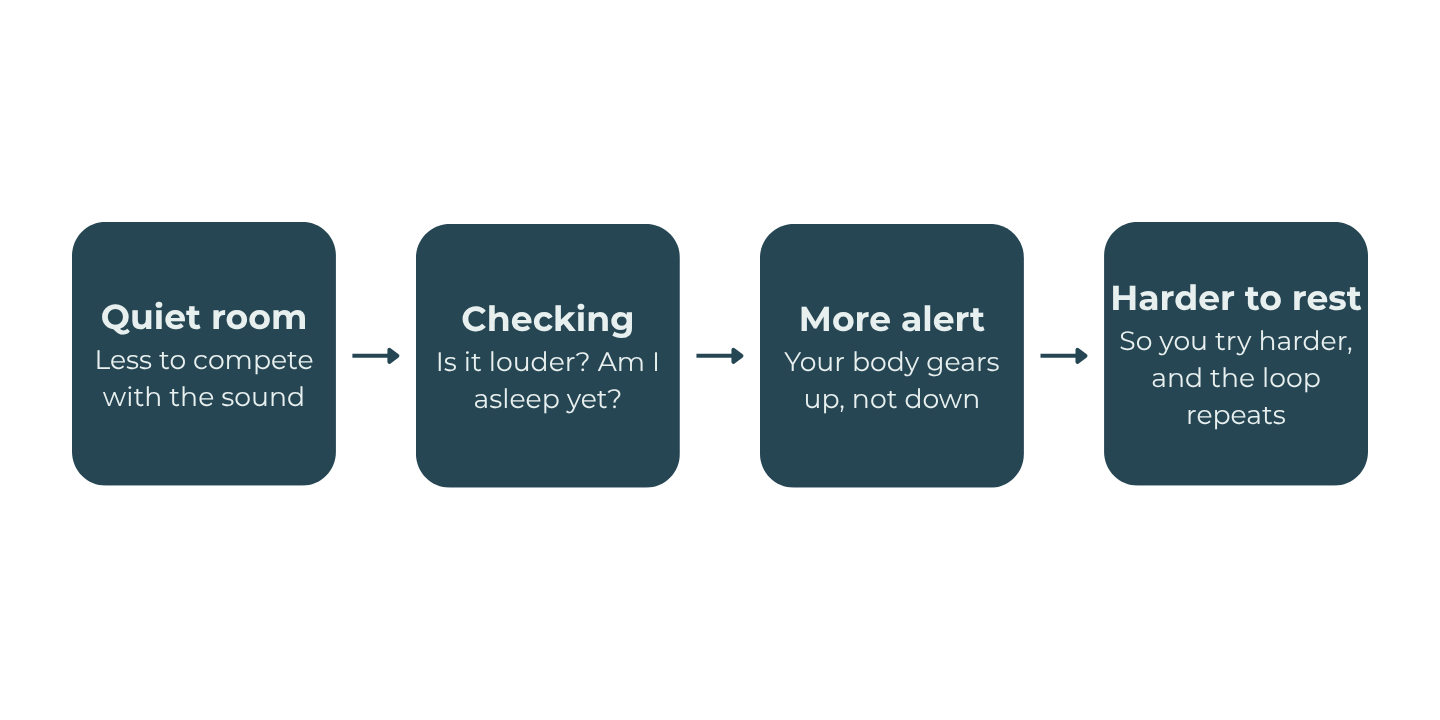
The house is finally quiet. And that’s exactly when tinnitus gets your full attention. You check the clock. You do the sleep math. You try to remember all the advice. Turn the fan on. Don’t look at your phone. Stop thinking about it. Is it louder tonight? Am I sleepy yet? If I fall asleep now, I’ll get four hours. Will it keep me awake? And the harder you work at sleep, the more awake you feel. Then the next day arrives with the night still attached. It’s harder to focus. Your patience runs out sooner. And by evening, bedtime has started to feel less like rest and more like a test. There's a reason these nights can become so difficult. And understanding what's happening is a useful starting point. But knowing why isn't always enough. What matters is having a way to respond when you're in the middle of it.
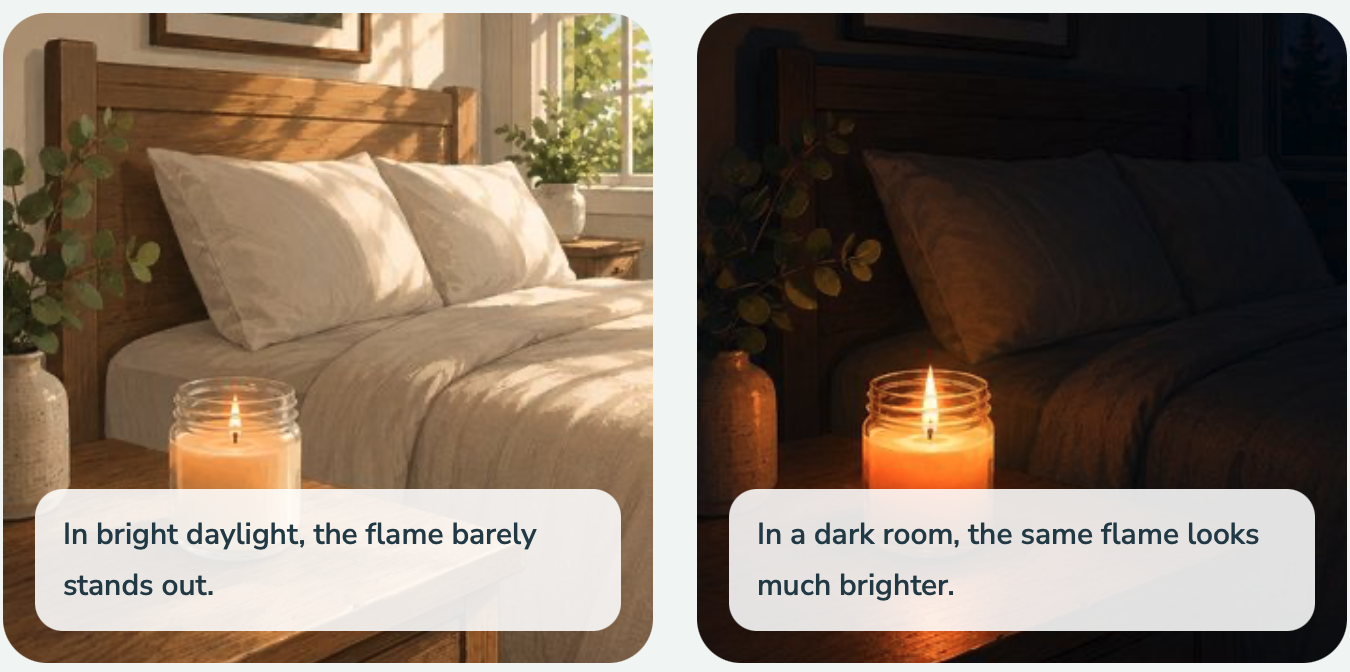
THE CANDLE DIDN’T CHANGE. THE CONTRAST DID.
WHY NIGHTS FEEL SO DIFFERENT During the day, your brain has a lot to take in: conversation, movement, the sounds all around you. At night, the world goes quiet and there’s simply less competing for your attention. Think of a candle. Tinnitus at night works the same way.
IT’S NOT JUST YOUR EARS
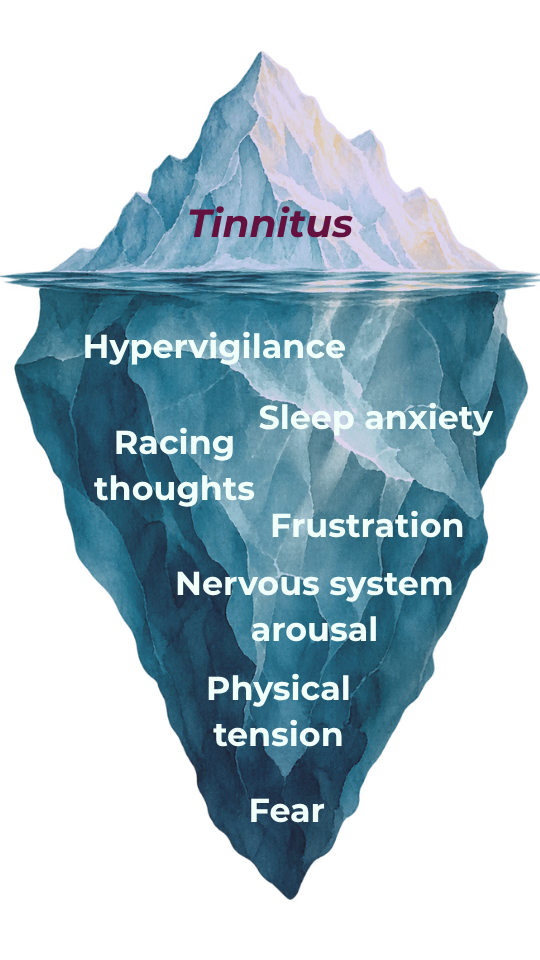
Tinnitus most often shows up alongside changes in hearing. But how much it takes over your night has a lot to do with attention and your nervous system.
YOUR BRAIN IS STILL ON DUTY
When something feels uncertain, the part of your brain designed to keep you safe starts keeping watch. It checks. And checks again. That’s the irony: you want to stop noticing it, but you keep checking to see whether you’re still noticing it. The sound may be more noticeable. That doesn’t mean it’s more dangerous.

THIS WAS MADE FOR YOU, EVEN IF…
You’ve only ever tried a white noise machine.
White noise can help, but there's more to using sound than turning on a machine. You'll learn how background, soothing, and interesting sounds can serve different purposes, and when each might be useful.
You’ve been told there’s nothing you can do.
There are practical skills you can learn to help change how you respond to difficult nights. You may not be able to control your tinnitus, but that doesn't mean you're powerless in how you respond to it.
Your hard nights don’t all look the same.
Some nights it's the sound. Other nights it's your thoughts, emotions, or physical tension. That's why the Tinnitus Sleep Compass starts with what you need in the moment and helps you find your way through the night.
THE HONEST PART
I don’t have a magic wand. They didn’t hand those out at graduation. I’m not going to promise to make your tinnitus go away, and I’d be wary of anyone or anything that does. What I can offer are practical tools for the nights when tinnitus feels especially hard: ways to settle your body, respond to a racing mind, and take some of the pressure off sleep. You may still hear tinnitus, but you can have more ways to care for yourself when you do.
A DIFFERENT QUESTION FOR DIFFICULT NIGHTS
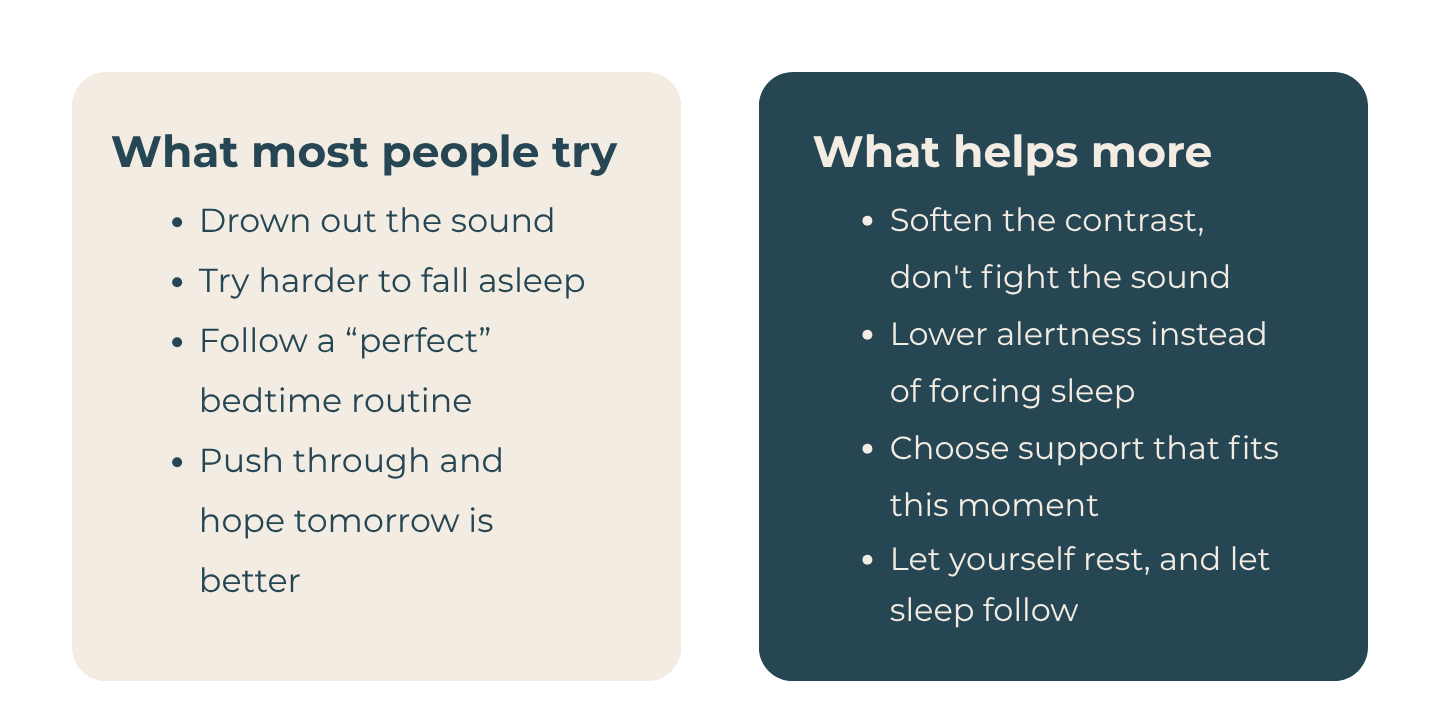
When tinnitus keeps you awake, it's easy to get caught up in asking, “How do I make myself sleep?” The Tinnitus Sleep Compass offers a different question: “What would support rest right now?” Instead of trying harder to sleep, you learn to recognize what you need and choose how to respond. That's where the Four S's come in. They offer four kinds of support you can draw on depending on what the night calls for. No set order. No checklist to complete.
THE FOUR S’S: GUIDED BY YOUR NEEDS
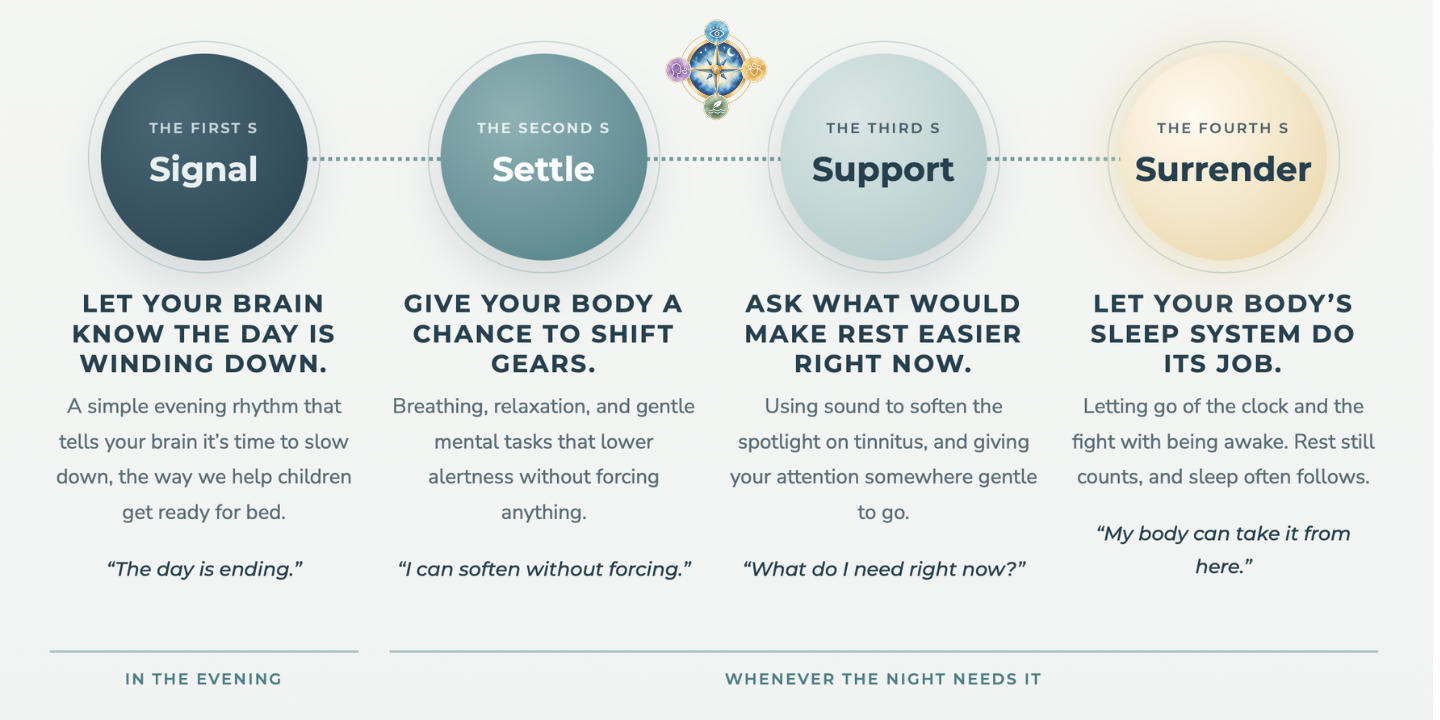
You don’t need to do all of this. Some nights you may need to settle. Some nights you may need more support. And some nights the most helpful thing you can do is surrender.
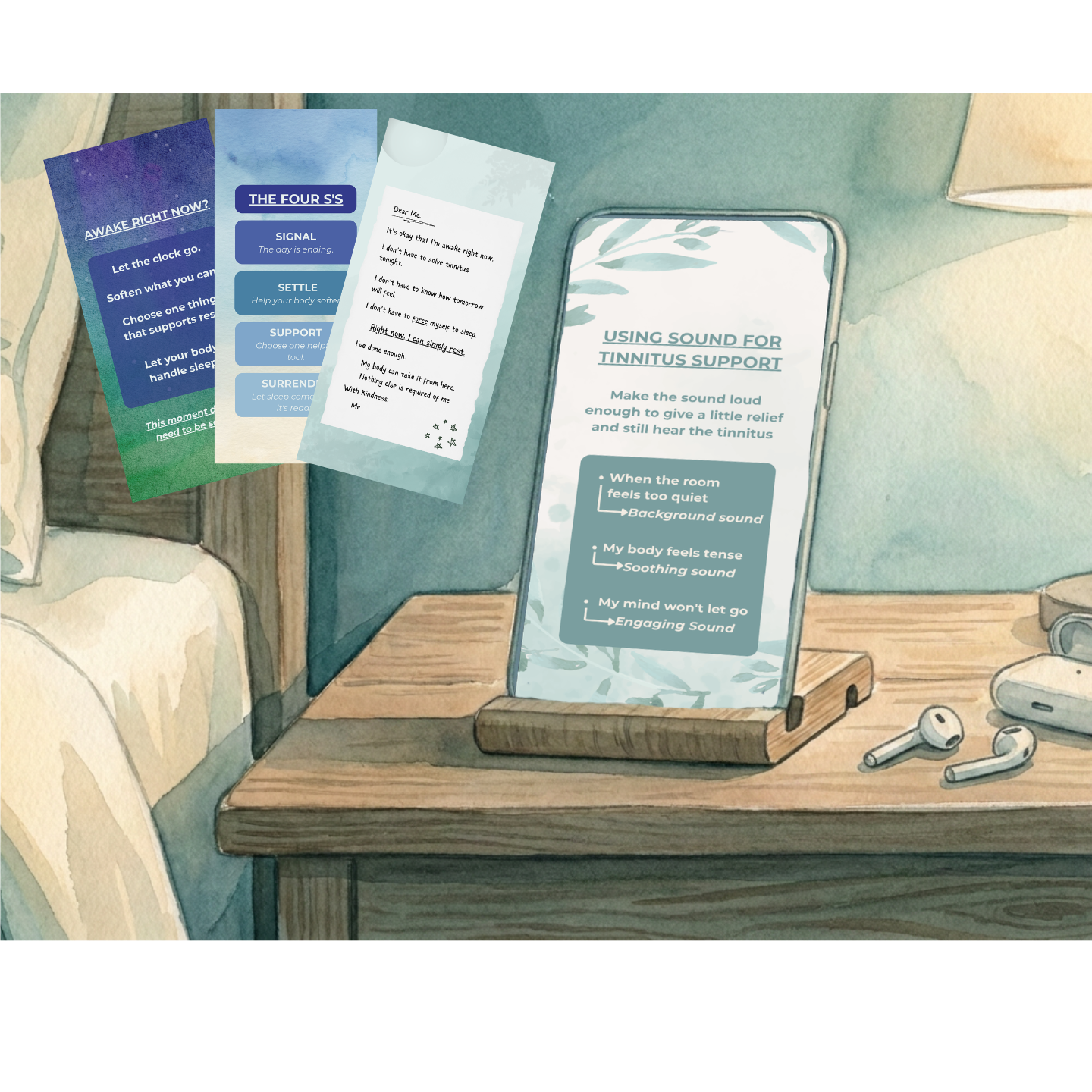
YOU DON’T NEED TO FINISH ANYTHING BEFORE IT HELPS
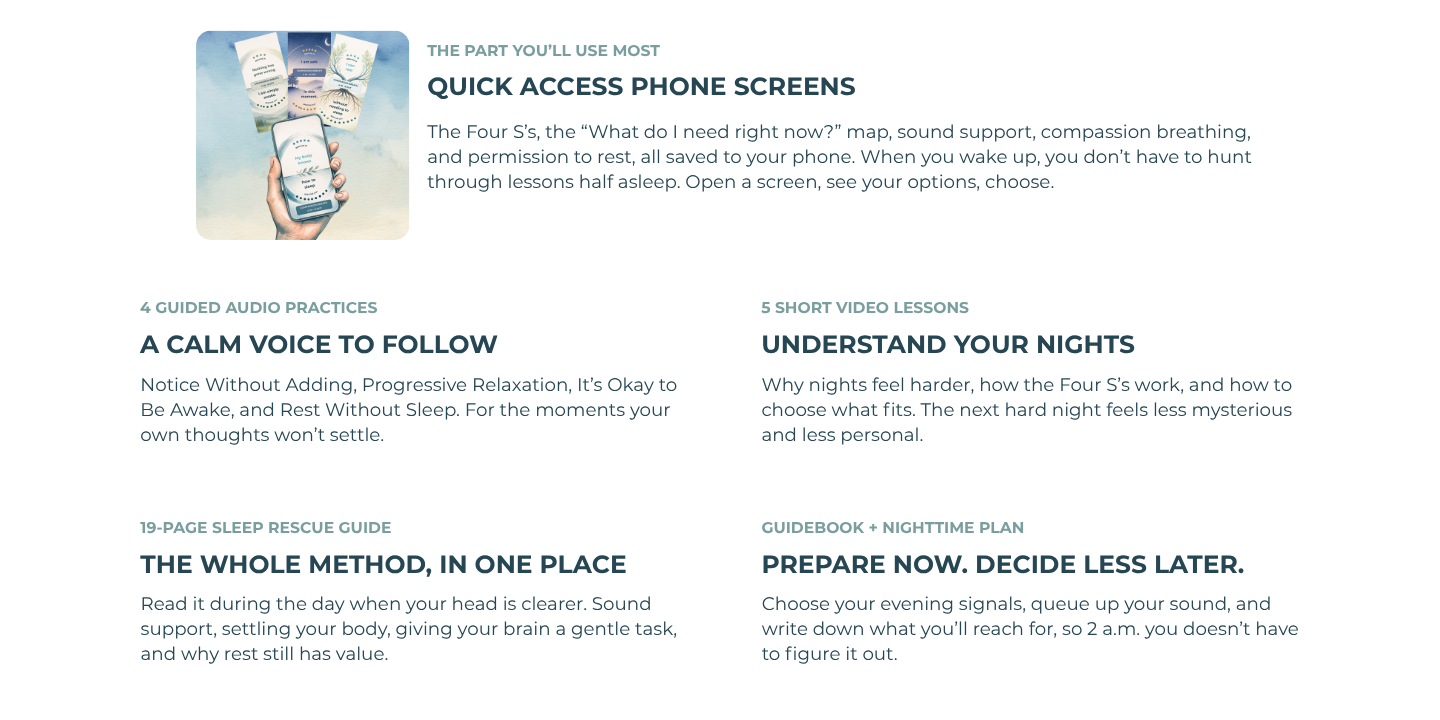
1 - Start with the short videos
Learn why nights can feel harder and how the Four S’s help you choose what to try.
2 - Make your nighttime plan
A few choices made during the day, so you decide less at 2 a.m.
3 - Save your phone screens
Your options, one tap away the next time you wake up.
EVERYTHING YOU NEED FOR HARDER NIGHTS, IN ONE PLACE

Hi, I'm Dr. Emily
I’m Dr. Emily Hensarling, an audiologist and tinnitus coach with more than 20 years of clinical experience specializing in tinnitus management. I’ve worked with countless people who manage their tinnitus during the day but struggle when nighttime comes. Sound can help, but it doesn’t always quiet racing thoughts, ease frustration, or take away the pressure to sleep. That’s why I created the Tinnitus Sleep Compass. It brings together practical tools to help you understand what’s happening, settle your nervous system, and find the support you need in the moment. It won’t eliminate tinnitus or guarantee sleep. But it can help you approach difficult nights differently. You don’t have to solve the whole night. Just start with the moment you’re in. With Kindness, Dr. Emily
WHAT HAVE YOU ALREADY SPENT ON SLEEP?
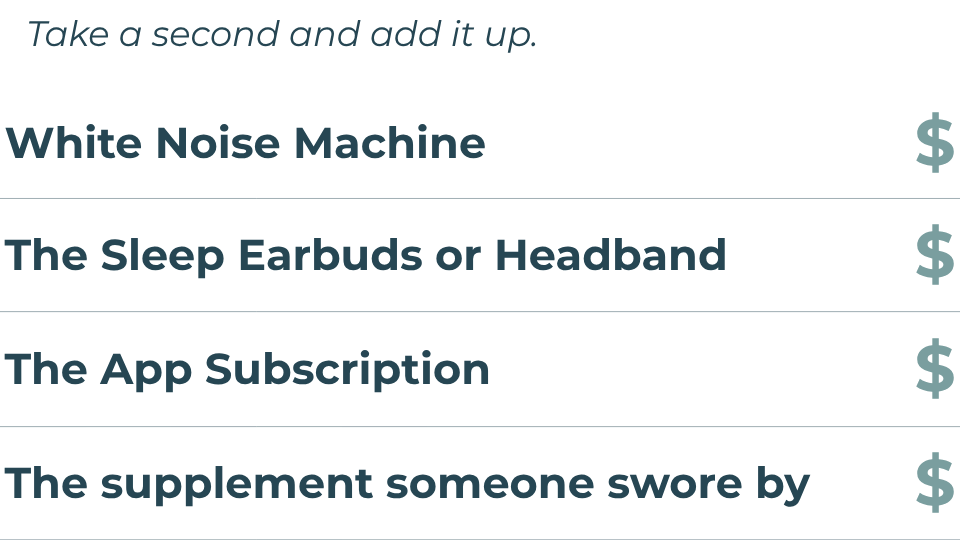
If the total is more than $47 and you’re still waking up at 2 a.m. without a plan, this is the missing piece. Not more equipment. A way to use what you have, and to know what to do when the night gets hard.
QUESTIONS YOU MIGHT BE ASKING
Will this make my tinnitus go away?
No. The Tinnitus Sleep Compass won't make tinnitus disappear, but it can help change how you experience difficult nights. Instead of fighting the sound, racing thoughts, or frustration, you'll learn practical ways to respond so those moments feel more manageable.
I’ve already tried white noise. Is this more of the same?
No. White noise is just one option. The Tinnitus Sleep Compass helps you discover different ways to use sound, calm racing thoughts, ease physical tension, and respond to frustration, so you can choose what fits your needs that night.
Tinnitus is in my ears. Why are we talking about my nervous system?
The sound is real, but how much it bothers you is influenced by how your brain and nervous system respond. That's why tinnitus may fade into the background during the day but feel overwhelming at 2 a.m. The Tinnitus Sleep Compass teaches you ways to settle your body and shift your attention, even when the sound is still there.

What if I use it and still don’t sleep?
The Compass can't guarantee sleep, but it can help you approach those frustrating moments differently. The Surrender practice helps you ease the struggle with being awake and find ways to rest, even when sleep hasn't come yet.

How long do I have access?
You get on-demand access to the full kit. The audio practices, guide, and phone screens are downloadable, so they’re yours to keep on your phone.

Is this medical advice? Should I see someone first?
The Tinnitus Sleep Compass is educational and doesn't replace medical care. If your tinnitus is new, has changed significantly, affects mainly one ear, pulses with your heartbeat, or comes with hearing changes, dizziness, or other concerning symptoms, seek medical evaluation.
THE NEXT HARD NIGHT WILL COME. YOU CAN MEET IT DIFFERENTLY.
You wake up at 2 a.m. The sound is there. But instead of the clock and the math, you reach for your phone and ask one question. What do I need right now? You press play. Your shoulders drop. And whether sleep comes in ten minutes or an hour, you’re resting, not fighting. The tricky thing about 2 a.m. problems is that by breakfast, they feel manageable again. So you tell yourself you’ll sort it out later. Then the night comes back around.
TONIGHT COULD LOOK DIFFERENT
If you’ve been meaning to do something about your nights, this is a gentle, practical place to start.
$47.00